
Driving in Agadir city: parking, traffic & one-way streets
Key takeaways
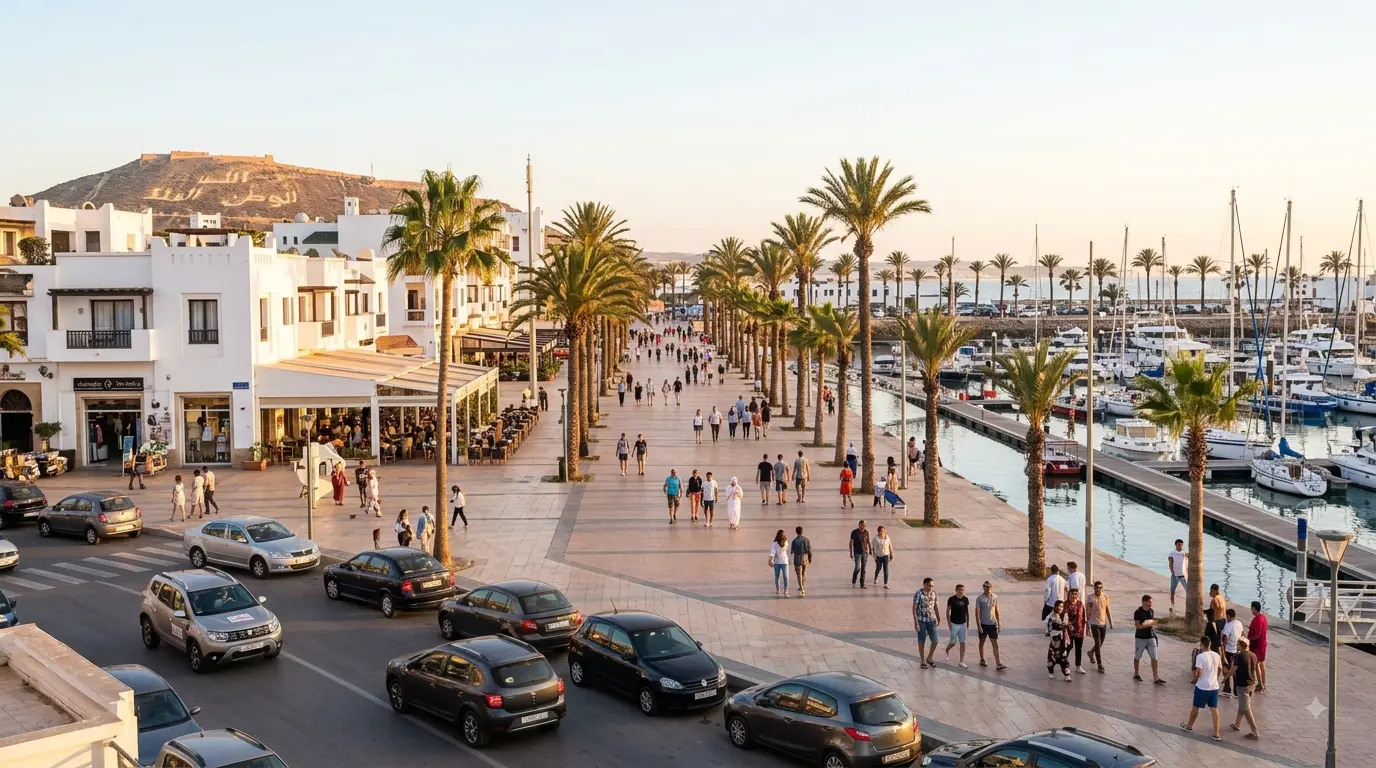
- Agadir was rebuilt after a 1960 earthquake with wide, modern grid streets — it's easier to drive than older Moroccan medina cities.
- Traffic is heaviest along Boulevard Mohammed V and near the marina during morning and early evening.
- Street parking is common and often managed by informal attendants ("gardiens") who expect a small tip.
- The old Kasbah and parts of Talborjt have narrower, older streets — park nearby and walk in.
- Roundabouts are frequent; give way to traffic already circulating unless signs say otherwise.
Agadir is one of the more straightforward Moroccan cities to drive in, largely because of how it was rebuilt. This guide covers what to expect on the roads, where parking is easiest, and which pockets of the city are better explored on foot.
Why Agadir drives differently from Marrakech or Fes
Agadir was almost entirely rebuilt after a devastating earthquake in 1960, using modern urban planning with wide boulevards and a clear grid layout — a sharp contrast to the tangled medina streets of cities like Marrakech or Fes. That makes Agadir considerably easier to navigate by car, with fewer of the narrow, one-way medina alleys that catch out drivers elsewhere in the country.
Where traffic builds up
The busiest stretches are Boulevard Mohammed V (the main coastal avenue) and the roads around the marina, especially during the morning commute and early evening. Traffic moves, but it's dense at these times — if you're just passing through the city on your way to a day trip, timing your departure outside these windows makes for a smoother start.

Parking in Agadir
Street parking is widely available, particularly in the newer parts of the city, and is often informally managed by attendants known locally as gardiens, who watch over parked cars in exchange for a small tip (a few dirhams) when you return. This is a normal, expected part of parking culture rather than anything to be wary of. Paid parking lots are also available near the beach, marina, and main shopping areas for a more formal option.
The Kasbah and Talborjt: park and walk
The hilltop Kasbah ruins and the older Talborjt neighborhood have narrower, less car-friendly streets than the rest of the city. It's easier — and often required — to park on the edge of these areas and continue on foot, the same approach used in medina districts elsewhere in Morocco.
Roundabouts and one-way streets
Agadir has frequent roundabouts, generally giving way to traffic already circulating unless signage indicates otherwise. One-way streets are more common in the older, denser parts of town than in the newer boulevards — pay attention to signage rather than assuming a street runs both directions, especially around Talborjt.
Heading out of the city
Once you're out of central Agadir, the roads open up considerably. Whether you're headed up the coast to Taghazout or inland to Paradise Valley, the exit routes are straightforward highway or coastal road driving.
Ready to explore Agadir and beyond?
Safe Rent Agadir offers both airport and city-center pickup, so you can start driving exactly where it's easiest for you.
Book your rental carFrequently asked questions
Is Agadir easy to drive in compared to other Moroccan cities?
Yes, generally. Its modern grid layout, a result of post-earthquake rebuilding, makes it easier to navigate than older cities with dense medina streets like Marrakech or Fes.
Do I need to tip parking attendants in Agadir?
It's customary but not obligatory — a few dirhams when you return to your car is standard practice.
Can I drive into the Kasbah or Talborjt?
These areas have narrower, older streets that are less car-friendly. It's easier to park nearby and explore on foot.
