
Is it safe to drive in Morocco as a tourist?
Key takeaways
- Yes — driving in Morocco is generally safe for tourists, and millions of locals drive daily without issue.
- Highways and intercity roads are modern and well maintained; challenges show up mostly in dense city centers.
- Morocco drives on the right, similar to mainland Europe and the US.
- Defensive driving matters more than in some Western countries — expect more assertive merging and lane changes.
- Alcohol and driving don't mix here: Morocco enforces a strict zero-tolerance policy.
It's one of the first questions people ask before renting a car in Morocco, and the honest answer is yes — driving here is safe for tourists, with a few adjustments in expectations. This guide covers what's actually true about road conditions, where visitors run into trouble, and what to know before you get behind the wheel.
The short answer
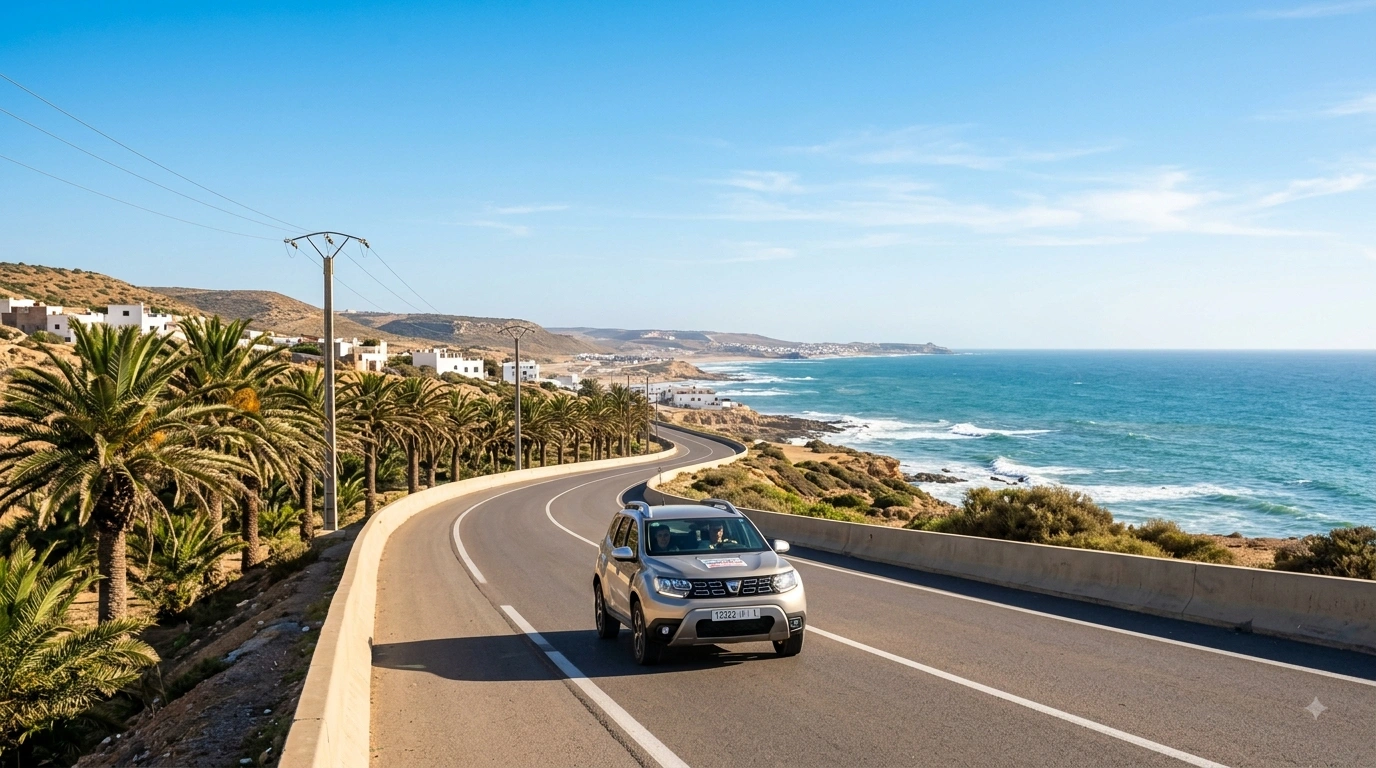
Morocco has invested heavily in its road network over the past two decades. Major highways connecting cities like Agadir, Marrakech, and Casablanca are modern, well-signposted, and well maintained. For most tourists, the honest experience is that driving here is easier than expected, especially outside of the biggest city centers. The main adjustment isn't danger — it's a different driving culture that takes a day or so to get used to.
Where it's genuinely easy
Intercity highways and coastal roads — including most of the routes tourists use around Agadir — are in good condition, clearly marked, and straightforward to navigate. Rural roads outside major towns tend to be calmer and less congested than driving in most of Western Europe or North America. If your trip is mostly coastal drives and highway travel between cities, you'll likely find the driving itself unremarkable.
Where it gets more demanding
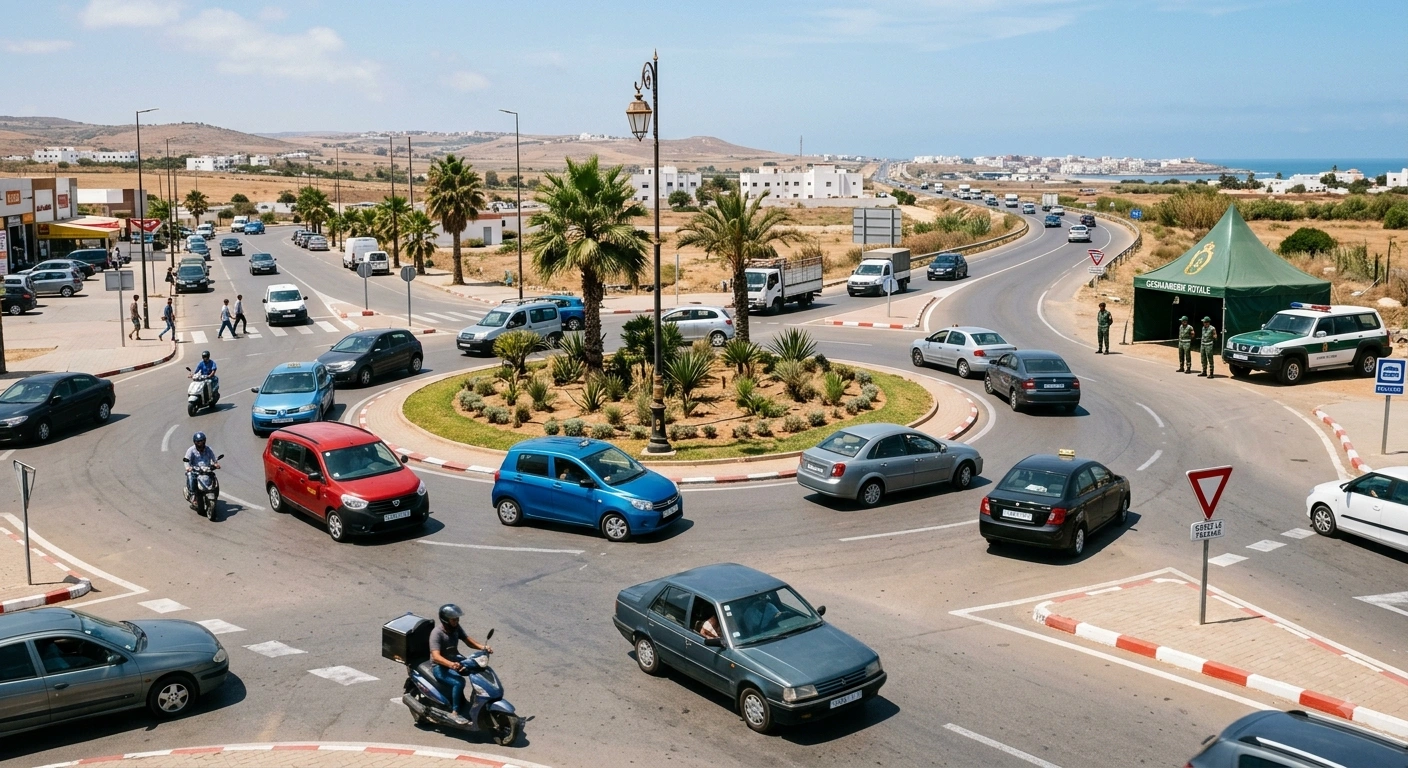
City centers are where most visitors feel the difference. Marrakech and Casablanca in particular have dense traffic, frequent lane changes, and roundabouts that don't always follow the yield rules you might expect. Scooters and mopeds move unpredictably between lanes, and horns are used as routine communication rather than a sign of anger. None of this makes driving unsafe exactly — but it does call for a more defensive, patient approach than many visitors are used to.
Mountain roads, like the routes into the Anti-Atlas or over passes such as Tizi n'Test, are a different kind of demanding: narrow, winding, and requiring slower, more deliberate driving rather than city-style alertness.
Generally straightforward
- Intercity highways and motorways
- Coastal roads (Agadir–Taghazout–Essaouira)
- Daytime rural driving
Needs more attention
- Marrakech and Casablanca city centers
- Narrow medina streets (avoid driving in, park outside)
- Mountain passes and unlit rural roads at night
Practical safety habits that make the biggest difference
- Finish driving before dark where possible — unlit rural roads, animals, and slower local traffic are harder to see at night.
- Drive a little under the posted limit on rural roads — speed cameras are common on popular routes, and it also gives you more reaction time.
- Expect checkpoints — police checks are routine on intercity roads; slow down, stay calm, and have your documents ready. See our full guide on checkpoints and fines in Morocco for what to expect.
- Don't drive into medinas — old town centers are usually pedestrian-only or too narrow for cars; park on the edge and walk in.
- Keep your distance from scooters and mopeds — they weave between lanes more than you'll be used to.
Is it different driving around Agadir specifically?
Agadir itself is a more modern, spread-out city than Marrakech or Fes, with wider roads and less of the chaotic medina-driving reputation other Moroccan cities have. Most of the popular day trips from Agadir — Taghazout, Paradise Valley, Essaouira — run on well-maintained coastal or intercity roads. For more detail on navigating the city itself, see our guide to driving in Agadir: parking, traffic & one-way streets.
What to check before you rent
Beyond driving habits, it's worth confirming the practical basics before pickup — what documents you'll need to rent a car in Agadir, and how rental insurance works in Morocco, so you're covered if anything does go wrong.
Ready to rent with confidence?
Safe Rent Agadir offers well-maintained cars, clear insurance terms, and airport or city-center pickup.
Book your rental carFrequently asked questions
Is it safe for a first-time visitor to drive in Morocco?
Yes. Most first-time visitors adapt within a day, especially if they start with highway or coastal driving before tackling busier city centers like Marrakech.
Which side of the road does Morocco drive on?
The right-hand side, the same as mainland Europe and the United States.
Is it safe to drive at night in Morocco?
City driving at night is generally fine, but rural and mountain roads are best avoided after dark due to poor lighting, animals, and slower-moving local traffic.
Do I need an International Driving Permit?
Requirements depend on your home country's license. See our guide on international driving permits for Morocco for the full breakdown.
