
Speed cameras, police checkpoints & fines in Morocco: what to know
Key takeaways
- Checkpoints are routine on Moroccan roads — they're not a sign anything is wrong.
- Slow down, roll down your window, and have your documents ready: license, passport, rental agreement, insurance.
- Speed fines are typically paid in cash, on the spot, with no negotiation.
- A common speeding fine is around 400 MAD; running a red light is roughly 700 MAD.
- Speed cameras are common on toll roads and just outside towns, where limits drop suddenly.
Checkpoints and speed cameras are one of the things tourists worry about most before driving in Morocco — and one of the least dramatic once you actually experience one. Here's what really happens, what it costs if you're stopped, and how to keep the whole thing brief and painless.
What happens at a checkpoint
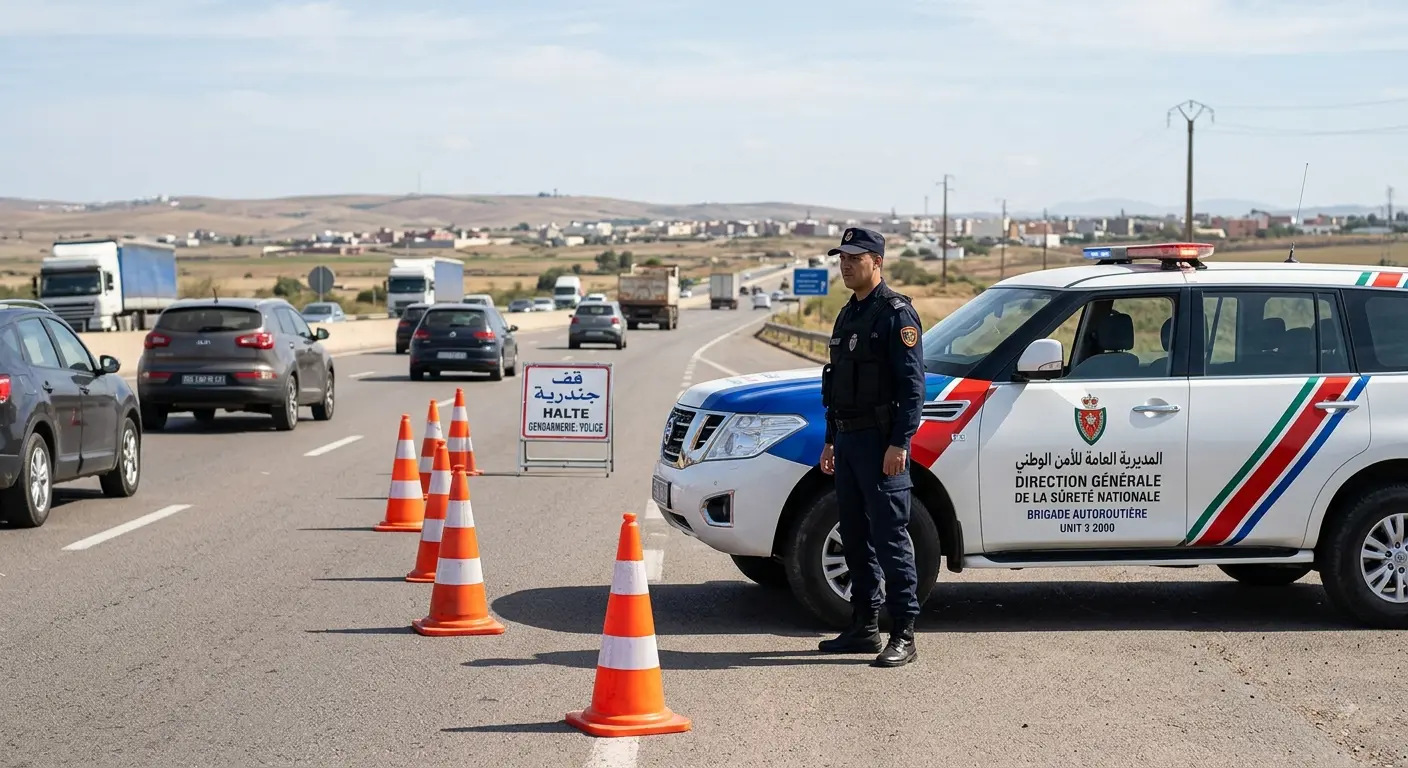
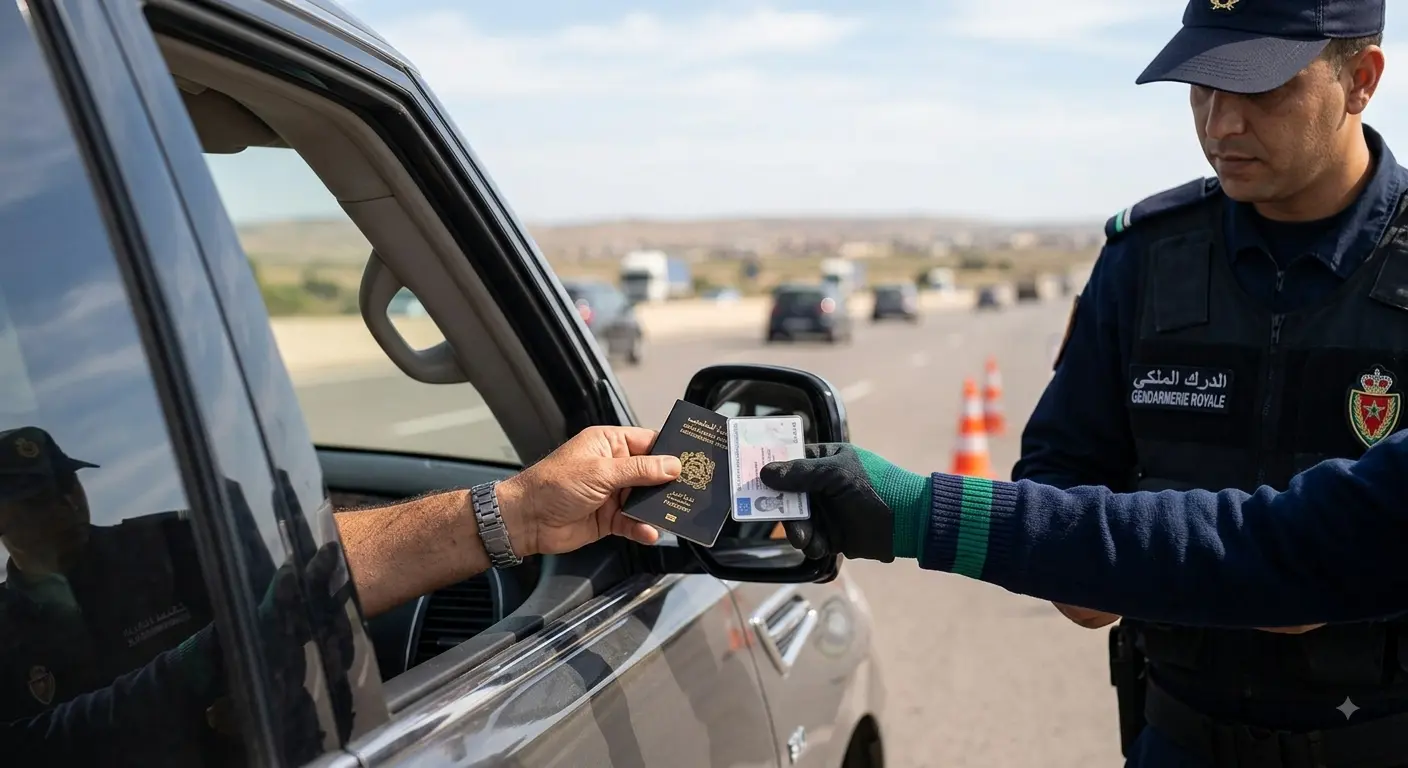
Police and Gendarmerie checkpoints are a normal part of driving in Morocco, especially on the approaches to towns and on intercity roads. When you see one, slow down well in advance, roll your window down, and be ready to hand over your documents: driving license, passport, rental agreement, and insurance certificate. Officers typically glance over the papers, may ask where you're headed, and wave you through — most stops take one to two minutes for tourists with everything in order.
Officers dealing with tourists are generally courteous. Stay calm, be polite, and keep answers brief. There's no need to volunteer more information than asked.
Speed cameras and where they're placed
Fixed and mobile speed cameras are common on toll roads and on the approaches to towns, where the limit often drops suddenly from 100 km/h to 60 or 40 km/h. This transition zone is exactly where enforcement tends to concentrate, since it's where visitors are most likely to still be at highway speed. Watch for the reduced-limit signs as you approach any settlement, even a small one.
What fines actually cost
If you're stopped for a violation, the fine is typically fixed and paid in cash directly to the officer — there's no formal negotiation, and no receipt is issued in many cases. Fine amounts can change, but as a rough guide:
| Violation | Typical fine |
|---|---|
| Minor speeding (even a few km/h over) | Around 400 MAD |
| Running a red light | Around 700 MAD |
| Other moving violations | Varies, generally paid on the spot in cash |
Reducing your chances of being stopped
- Drive a little under the posted limit on rural roads, especially near town entrances.
- Watch for other drivers flashing their headlights — it's commonly used to warn of a checkpoint or hazard ahead.
- Keep your documents within easy reach rather than buried in luggage.
- Wear your seatbelt at all times — it's one of the more commonly checked items.
What to keep in the car
Always carry your driving license, passport, the rental agreement, and proof of insurance. These are the four documents officers most commonly ask to see. For the full list of what you'll need when you pick up your car, see our guide on documents required to rent a car in Agadir.
Drive with the right paperwork from day one
Safe Rent Agadir gives you a full document checklist and everything you need at pickup, so checkpoints stay quick and simple.
Book your rental carFrequently asked questions
Are police checkpoints normal in Morocco?
Yes, completely routine — most tourists pass through several during a road trip without any issue.
Do I have to pay fines in cash?
In most cases, yes. Officers typically collect the fine on the spot in cash, so it's worth keeping some dirhams in the car for exactly this situation.
Are speed cameras common in Morocco?
Yes, particularly on toll roads and near town entrances where speed limits drop suddenly.
What documents do I need to show at a checkpoint?
Your driving license, passport, rental agreement, and insurance certificate — keep all four accessible rather than packed away.
